Australia’s organics processing sector is moving through the most significant period of change in its history. State mandates are accelerating collection coverage, participation rates are climbing, and the composition of material arriving at the gate is shifting with them, more food organics, higher moisture content, different contamination profiles than many facilities were originally designed around.
That shift rarely announces itself as failure. It shows up first as drift, a gradual widening of the gap between the conditions a processing system was designed for and the conditions it now operates under. For some facilities, that drift has already surfaced as odour complaints, product quality variation, or rising operating costs. For others, performance still looks steady while the underlying assumptions quietly age.
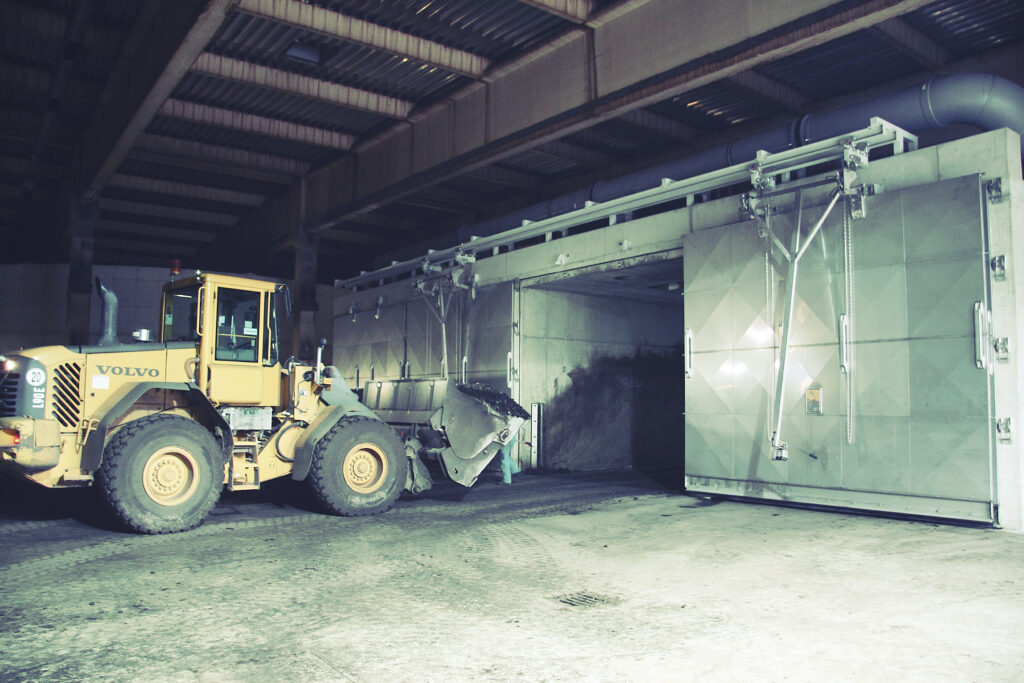
Across composting facilities, including in-vessel composting (IVC), covered aerated static pile (CASP) and open windrow systems, residence time, aeration configuration and front end contamination removal calibrated years ago may no longer match the feedstock now entering the gate. None of this reflects poor original design, it reflects how quickly participation and diversion targets have moved. Industry capacity assessments have consistently pointed to a meaningful shortfall between planned processing infrastructure and the volumes FOGO expansion will deliver over the next several years, a gap every processor is, in one way or another, already operating inside of.
Regulatory expectation is moving in parallel with feedstock change. Odour management, bioaerosol emissions, leachate control and community impact assessment are being defined more precisely across several jurisdictions. Enclosure configuration, air management, negative pressure control, leachate containment and biofilter sizing aren’t purely engineering choices, they’re compliance decisions, and facilities that treat them as an afterthought to process design tend to face costlier retrofits than those that build compliance in from the outset.
The common thread running through feedstock change, capacity growth and regulatory evolution is process strategy, the underlying logic of how material actually moves through a facility from receival to final product. Define that logic clearly early, and technology selection, footprint, air management and long term operating cost follow with fewer downstream revisions. Leave it loosely defined, and those gaps get built into concept designs and licence conditions, becoming progressively more expensive to unwind later.
For the sector as a whole, the practical implication is straightforward. Facilities performing well today aren’t automatically positioned for the feedstock and regulatory conditions of 2028 or 2030. The processors best placed to manage that transition aren’t necessarily the ones with the newest infrastructure, they’re the ones who periodically test their process assumptions against current and near term conditions, rather than waiting for performance to signal the gap has already opened.
OREZ works across the organics processing infrastructure lifecycle, from independent process review through concept development, detailed design and delivery. The facilities that come through this period of change intact are unlikely to be the ones with the newest equipment. They will be the ones willing to test their own process assumptions before feedstock, regulation or community expectation tests those assumptions instead. That’s a question worth putting to any facility, including the ones performing well today, because the gap between “working” and “still working in three years” rarely announces itself until it’s expensive.
For enquires please email info@orez.com.au or visit www.orez.com.au